↓
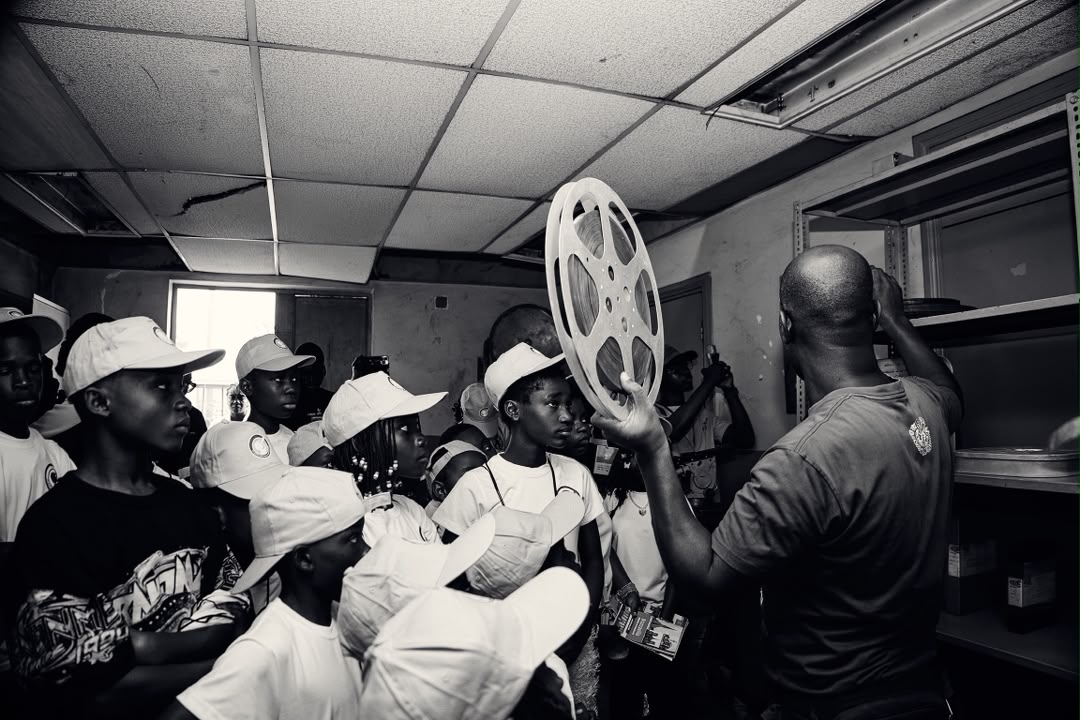
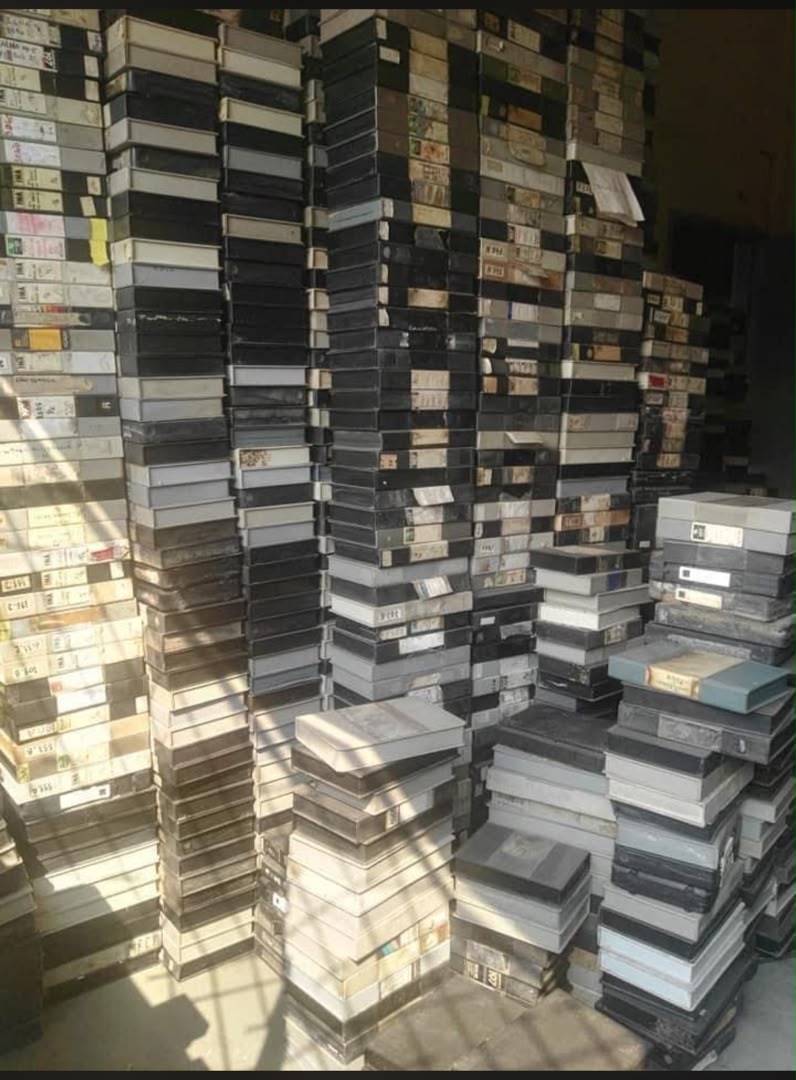
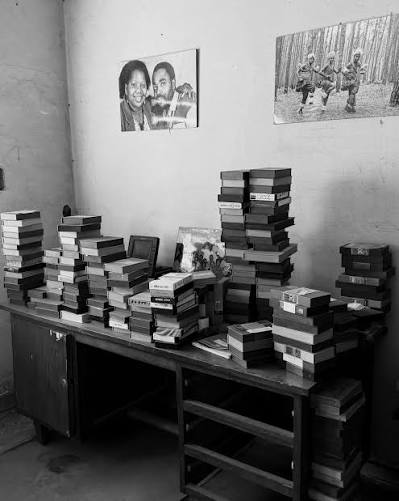
The Republic of the Congo, a country in Central Africa once colonised by France for its precious wood, rubber, ivory and sugar, was one of the first countries on the continent to adopt television. In 1962, two years after independence, the country built the TéléCongo studios in the Bacongo district, in the south of its capital, Brazzaville. This is where what Sabiya Mapaka considers “The country's greatest wealth, more precious than oil, gold or wood” can be found today: reels and cassettes that hold the entire audiovisual memory of the country.
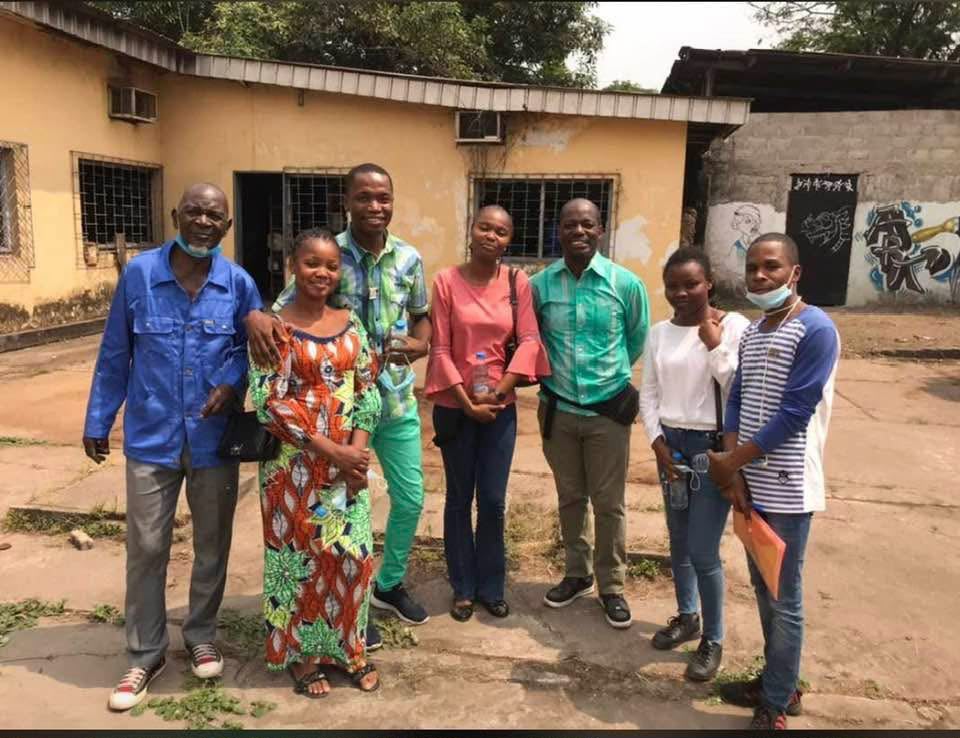
Yet the site had fallen into oblivion, completely abandoned in 2009 when the national television moved out. In 2020, the fragments of this collective memory found a protector in Hassim Tall Boukambou, filmmaker and archivist, author of the Trilogie Révolutionnaire(s), who brings together young volunteers to preserve and pass on this treasure.
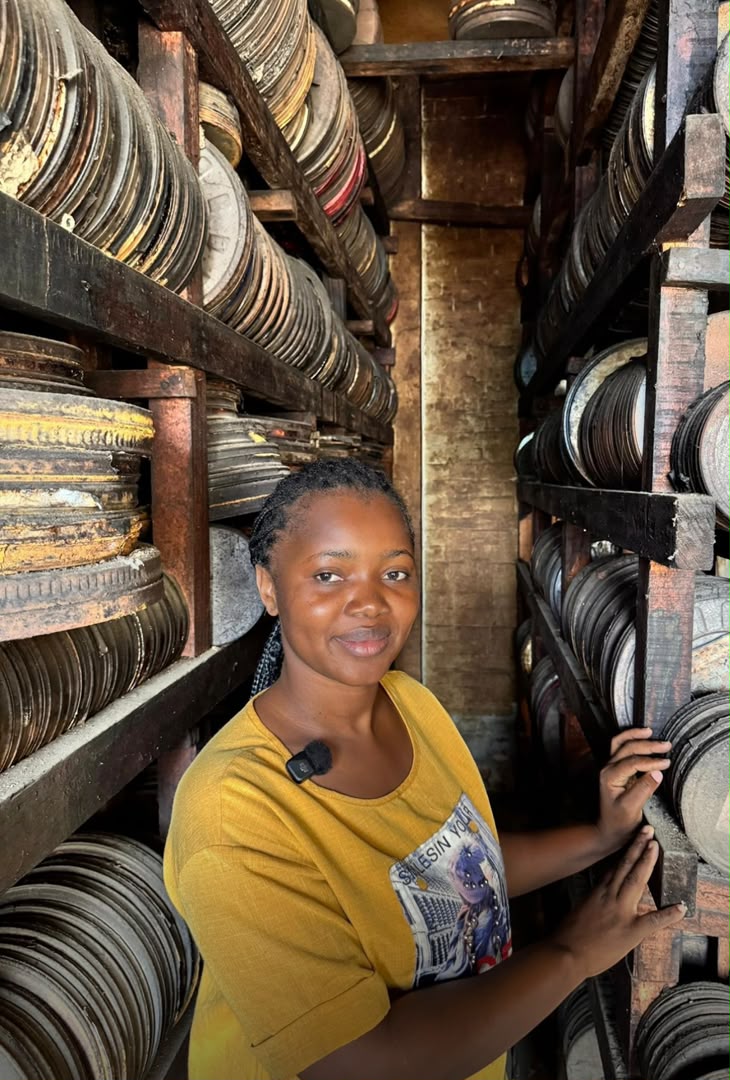
Among them, Sabiya Mapaka, a lively and committed young woman, divides her days between the Maison des Archives, where she volunteers, and the Tourist Office. It was in 2021, while she was still a History student, that she developed a passion for heritage. “I wanted to study art history because I loved French films, especially the ones about art. I was impressed by the way they described a reality that I couldn't see, but that they managed to convey through the image. Unfortunately, there was no art history at the university, so I went on to study African History and Civilisations. Today, I prefer documentaries.”
She tells us what led her to the Maison des Archives: “In 2021, when I was a student, I was first selected to take part in the ERPA project, a training programme devoted to multidisciplinary archival research. It was during this training that I discovered the audiovisual archives, on a visit. I also met the project leader there, Hassim Tall Boukambou. Then there was a strike at the university, so instead of staying at home, I decided to go and help at the archives, and it became my passion. For now, the project is still in its early days and we are still at the cleaning stage. Soon we will be able to digitise, and then we will move on to restoration. My next passion.”
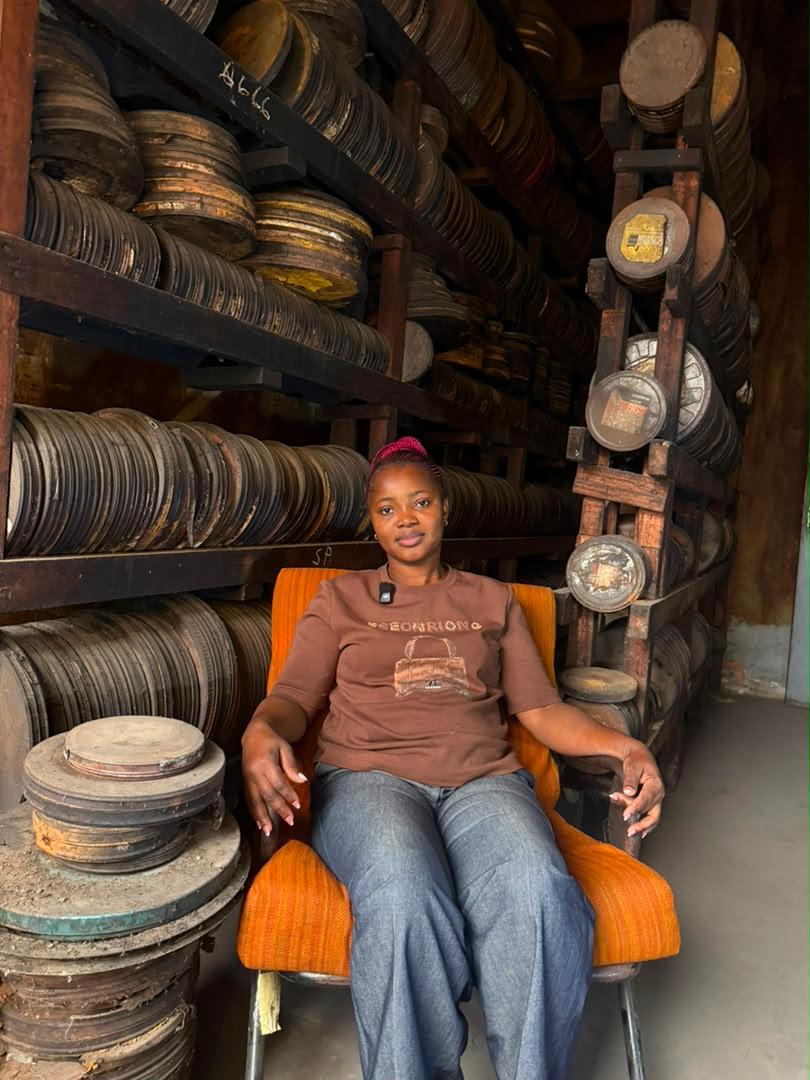
Sabiya Mapaka uses social media and TikTok to raise awareness among young people and involve them in this preservation project: “For a bit of background, the Maison des Archives audiovisuelles du Congo is housed in a building that dates from 1962. In 2009, when the Congo built a new facility for the television, they moved out and left all these reels behind. And so, from 2009 to 2020, these archives were abandoned. It took this project to remind the Congolese that we have an audiovisual heritage that lies dormant and neglected.
Recently, for example, the former Minister of Culture (the poet and playwright Maxime N'Debeka) was visiting the archives and called out to me, saying: ‘I thought these archives had been destroyed during the 1997 civil war’. And it was a shock for him to learn that no, they were still there. So for me, communicating about this building that holds this memory, and reaching people, is something very important. I will keep spreading the word: the archives, the archives, the archives!
Today, because we communicate, young people are really interested in the idea of saving this heritage and coming to volunteer here. With my last video, I was surprised to see so many young people motivated to organise a fundraiser to repair the building's roof. Young people love creating content and telling stories. This building, which once housed the Télé Congo studios, speaks to them: they project themselves into it and see it as a place where stories were created, told and passed on. For them, it is a living heritage that can also inspire their own creativity.”
The Republic of the Congo holds a significant radio collection from Free France dating from 1940, in addition to the collection of the Maison des Archives, made up for the most part of everything broadcast on television from independence until 2007: programmes, news bulletins, political speeches, filmed theatre (a very popular art in the Congo) and a few films, which urgently need to be digitised so as not to disappear under the effects of heat and time. “The conservation conditions are archaic. Sometimes right on the floor, or on wooden shelves. Reels are the most fragile media; every day, we lose some.” A large part of the archives from the 1960s and 70s is therefore lost, irreversibly damaged by humidity, heat and lack of care. Even so, the public authorities provide almost nothing to fight the disappearance of this memory: “Their silence about the state of the archives makes us wonder. They know the condition of these archives, they know what they represent, and yet why do they sometimes seem not to see anything? These archives are their speeches, their decisions, their achievements. They are part of the legacy they will leave to their children, to their grandchildren, but also to an entire people. So, is it deliberate? Could it help keep young people in the situation we are in today? Do they think that not knowing our history makes us easier to manipulate? Because when you know who did what, who said what and in what context, you start asking questions, and the right ones. But when you don't know, how can you ask them?”
To carry out this project, which requires significant financial, human and material resources, the INA, the French National Audiovisual Institute, provides its support, notably by working alongside the archivists to help the Republic of the Congo in this process of conservation and digitisation. A gesture perceived ambivalently by the Congolese: “From the point of view of some Congolese, the expertise is welcome, because the INA is a respected national institution and, given the way it preserves French memory, that deserves praise. But from a political point of view, some Congolese see it as a lack of respect. The Congo is a sovereign country that can do things well. Having a partnership is good, but depending on another State to preserve its memory is a problem.”
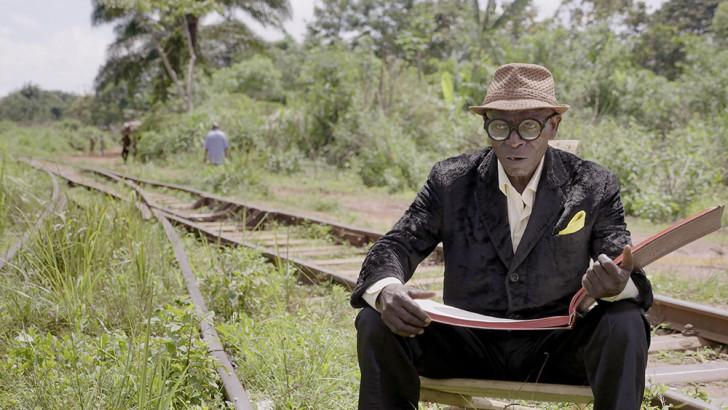
But in the career of this young historian and cultural mediator, there are moments when all this human investment, however rudimentary, takes on its full meaning and value: “One moment that moved me was the screening of the film Congo-Océan : un chemin de fer et de sang, a documentary that was made from some of our audiovisual archives. At the end of the screening at Canal Olympia, given the atrocity of the images shown in the documentary, all the Congolese stood up as one to sing the national anthem. They became aware of what the archives give us. It is a battle that must be fought. That is the aim of the project: to make memory and the archives accessible to researchers, historians, journalists, filmmakers, and Congolese citizens. Because preserving just for the sake of preserving is pointless. We must preserve in order to use them, to write past and future history. To keep Congolese collective memory alive.”
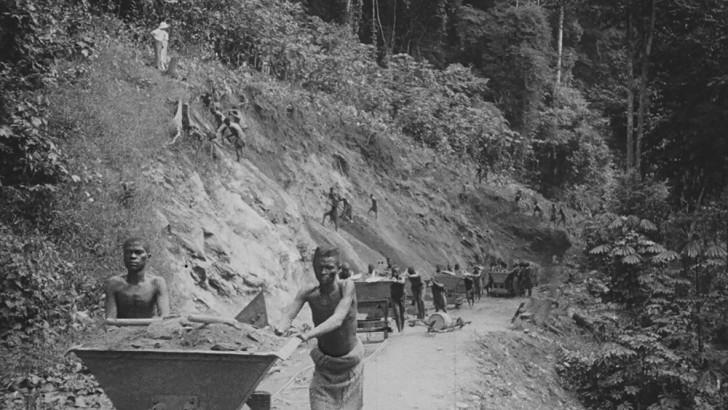
Today, Hassim Tall Boukambou, Sabiya Mapaka and other volunteers are working tirelessly to make the Maison des Archives a place that brings people together around a living memory spanning nearly 130 years of the country's History, from popular programmes such as Kéba Na Caméra to major political speeches and archive footage from colonial times, for artists, researchers and historians, but above all for the people.
Interview conducted in February 2026.